Showing posts with label Social Studies. Show all posts

Thursday, March 23, 2023

The 2023 Civics for All of US Teacher Institute

Great professional development for Social Studies Teachers! 

“Now Accepting Applications for the 2023 Civics for All of US Teacher Institute in Washington, DC, July 17–21!

The 2023 Civics for All of US Teacher Institute is made possible in part by the National Archives Foundation.

Teachers working with grades 3–12 are invited to apply for the inaugural Civics for All of US Teacher Institute with the National Archives in Washington, DC.

During this week-long program, 20 educators will explore how to use National Archives holdings to teach the civic knowledge and skills students need for civic engagement in the 21st century, with a special emphasis on media literacy. Participants will engage with primary sources to shed light on the successes, failures, debates, and challenges in the history of our democracy and discover resources for sharing diverse perspectives and historically underrepresented voices in classroom civics lessons. This professional development experience will also highlight resources for fostering civic participation at any age through examples of student voices in the archives.

Throughout the week, teachers will:

Take part in special tours and activities within the exhibits of the National Archives Museum.

Discover strategies for teaching with primary sources and making civics connections across the curriculum in hands-on sessions developed by National Archives educators across the country, including the Presidential Libraries and Center for Legislative Archives.

Explore how landmarks and institutions in the nation’s capital can enhance students’ civic learning through site visits.

Take part in collaborative group work and discussion with educators from across the country.

Create a teaching activity that explores a big civics idea with primary sources from the National Archives.

Upon successful completion of the teacher institute, participants will receive a stipend of $2,450 provided by the National Archives Foundation. Participants will be responsible for making their own travel and lodging arrangements.

Applications are being accepted through March 31, 2023.”

Monday, September 19, 2022

Student Cam 2023 Competition


Here is the theme for the Student Cam 2023 Competition:

"If you were a newly elected member of Congress, which issue would be your first priority and why?”


“StudentCam is C-SPAN's annual national video documentary competition that encourages students to think critically about issues that affect our communities and our nation.

This year, we're asking students in grades 6-12 to create a short (5-6 minute) video documentary on a topic that relates to the competition theme, "If you were a newly elected member of Congress, which issue would be your first priority and why?"

The submission deadline for all entries is Friday, January 20, 2023. With cash prizes totaling $100,000 each year, C-SPAN awards prizes to the top 150 student documentaries. If you are a teacher and listed as an adviser on one of the top 50 winning films, you will also receive a cash award. Since 2004, C-SPAN has awarded over $1.2 million dollars in cash prizes to students and teachers.”

Wednesday, September 15, 2021

Student Cam 2022


Student Cam Contest

“StudentCam is C-SPAN's annual national video documentary competition that encourages students to think critically about issues that affect our communities and our nation.

For the 2021/2022 school year, we are asking students in grades 6-12 to create a short (5-6 minute) video documentary on a topic that relates to the competition theme, "How does the federal government impact your life?"

The submission deadline for all entries will be Thursday, January 20, 2022. With cash prizes totaling $100,000 each year, C-SPAN awards prizes to the top 150 student documentaries. If you are a teacher and listed as an adviser on one of the top 50 winning films, you will also receive a cash award. Since 2004, C-SPAN has awarded over $1.2 million dollars in cash prizes to students and teachers.


"How does the federal government impact your life?"

Explore a federal policy or program that has an impact on you or your community. Evaluate the effectiveness of this policy or program by researching multiple perspectives on it.


Click here for a printable Student Checklist (Google Doc)

The competition is open to all students in grades 6-12. Grades 6-8 compete in the Middle School category, and grades 9-12 compete in the High School category. For more information, visit our Prizes page.

Students may compete individually, or in teams of either 2 or 3 members.

Documentaries must include clips of supporting or opposing C-SPAN video that relate to the chosen topic.

Winning StudentCam documentaries will thoroughly explore a variety of viewpoints related to the chosen topic, including those that may oppose the filmmakers points of view. We recommend that you interview experts on your chosen subject.

Documentaries must be between 5-6 minutes in length. *End credits, if applicable, must begin after the 5-minute mark but are permitted to run longer than the allotted 6-minute time frame.

Entries must include either end credits or a works cited list. Students can use whichever format they currently use to cite their sources.
For the complete list of competition rules, click here.”

Thursday, May 6, 2021

Asian/Pacific American Heritage Month


In honor of Asian American and Pacific Islander Heritage Month, I thought I would feature some famous Asian and Pacific Americans that you might not know much about.

Noriyuki “Pat” Morita was born on June 28, 1932, in Isleton, California. His father immigrated to California from Kyushu in 1915. His mother immigrated to California in 1913. He had a brother who was twelve years older than him.

When he was two, he was diagnosed with spinal tuberculosis and spent nine years in the Weimer Institute and Shriners Hospital. For long time periods, he was enveloped in a full body cast and told he would never walk. While in the hospital, he became friends with a visiting priest who told him that if he ever converted to Catholicism, the priest would rename him to "Patrick Aloysius Ignatius Xavier Noriyuki Morita". When he was 11, he had spinal surgeon and learned to walk. He was reunited with his family, who were interned at the Gila River camp in Arizona. Almost two years later, he was relocated to the Tule Lake War Relocation Center.

After WWII, Morita graduated from high school in the Bay area in 1949. The family ran a Chinese restaurant. Morita entertained customers. In 1956, his father was killed in a hit and run accident so his mother and him kept the restaurant running for four more years.

In the 1960s, Morita was married and employed as a data processor for the Department of Motor Vehicles. Eventually he worked for Aerojet General and then Lockheed. He was the liaison between engineers and programmers mapping out lunar eclips for the Polaris and Titan missile projects.

After he felt burned out, he decided to go into show business and worked as a stand up comedian in the Sacremento and San Francisco area. He took the stage name as Pat Morita. Eventually he moved to Los Angelos to try comedy there. In the early 1970s, he got a role on Sanford and Son. From 1975-1983, he played Arnold on Happy Days. He was also Mr. Miyagi in The Karate Kid. He played many roles after this. During his life, he suffered from alcoholism.

He was married three times and had three children.

On November 24, 2005, Noriyuki “Pat” Morita died of kidney failure after a urinary tract and gallbladder infection.

Thursday, May 28, 2020

Michelle Kwan

In honor of Asian American and Pacific Islander Heritage Month, here is some more information about another famous Asian American that you might not know much about.

Michelle Kwan was one of America’s most popular figure skater and has won numerous Olympic medals.

Kwan was born in 1980 in California to parents who immigrated from Hong Kong. She grew up speaking Chinese and English. She started figure skating when she was five years old. Her older sister Karen and her practiced three to four hours every day. It was very expensive and when Kwan was ten, her parents couldn’t afford a coach, but a member of the Los Angeles Figure Skating Club helped them out. In 2009, she earned a bachelor’s degree in international studies with a minor in political science from Josef Korbel School of International Studies. In 2013, she married Clay Pell, an American lawyer and former director for strategic planning on the National Security staff at the White House. After four years of marriage, they filed for divorce in 2017.

Kwan won five World Championships and nine US Championships. She holds the record for the most consecutive US titles and consecutive4 US Championship medals.

In 2006, Kwan was named as a public diplomacy ambassador representing American values and traveled a lot.

In 2008, She became a member of the Committee of 100, which is a Chinese American organization that encourages relations between the US and China.

In 2011, she served as an adviser to the US-China Women’s Leadership Exchange and Dialogue.

In 2012, Kwan was appointed as a state department senior adviser for public diplomacy and public affairs.

In 2014, she joined Fox Sports for the Winter Olympics broadcast.


Wednesday, May 27, 2020

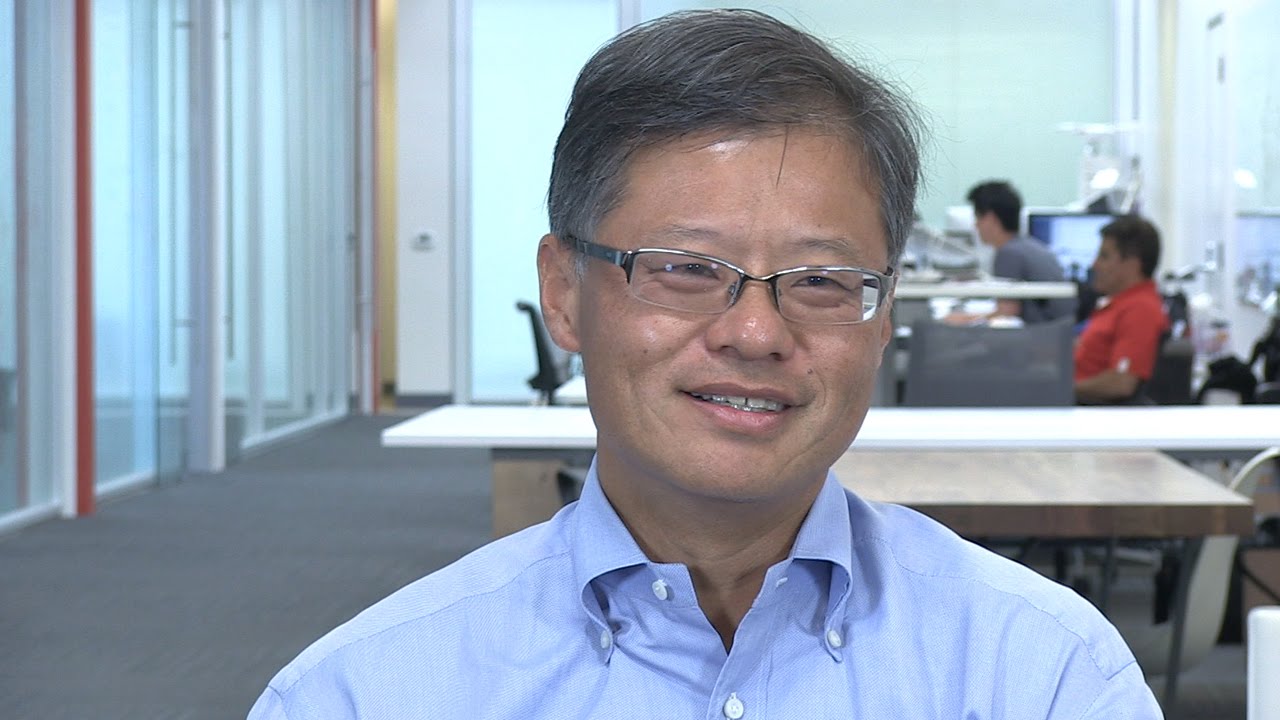
Jerry Yang

In honor of Asian American and Pacific Islander Heritage Month, here is some more information about another famous Asian American that you might not know much about.

Jerry Yang is the co-founder and former CEO of Yahoo! Inc.

Yang was born in Taiwan in 1968. In 1978, his family moved to California where the extended family took care of the children while his mother taught English to others. When he moved to the US, he took the American name Jerry instead of using his name Yang Chih-Yuan. He only knew the word “shoe” when he came to America but within three years, he became fluent in English. He attended Stanford University where he earned his Bachelor of Science and Master of Science in electrical engineering. He met his friend David Filo at Stanford.

Yang and David Filo created an internet website that consisted of a directory of other websites in 1994. The eventually renamed it Yahoo! In 1995, Sequoia Capital invested $2 million in Yahoo! And in 1995, Reuters and Softbank gave more funding. In 1996, it went public. Yang was named as one of the top 100 innovators in the world under the age of 35 in 1996. Yang served as CEO from 2007 to 2009.

In 2012, Yang left Yahoo! and began mentoring other technology startups. He also became an investor through his firm called AME Cloud Ventures.

Yang is married to a Japanese woman, Akiko Yamazaki, and they live in California. He likes to play golf and watch sumo-wrestling.

In 2007, Yang and his wife gave $75 million to Stanford University where $50 million was spent building the “Jerry Yang and Akiko Yamazaki Environment and Energy Building.” This building was designed with sustainable architecture principles. In 2017, they pledged $25 million to the Asian Art Museum of San Francisco.

Tuesday, May 26, 2020

Amy Tan

In honor of Asian American and Pacific Islander Heritage Month, here is some more information about another famous Asian American that you might not know much about.

Amy Tan is a Chinese-American writer. Her first novel was the 1989 novel called The Joy Luck Club about Chinese women and their American born daughters and was eventually made into a movie. I loved this book and movie because I could relate to a lot of the feelings the young girls experienced. Tan has written several other novels and also two children’s books.

Amy Tan was born in 1952 in California. Her parents had immigrated to the United States in 1949 and then moved to Europe when she was a teenager. When she was only fifteen years old, her father and older brother died of brain tumors six months apart. At that time, her mother moved Tan and her younger brother to Switzerland. During this time, she learned about her mother’s previous marriage to another Chinese man and how her mother had to leave her children behind in Shanghai. This became the basis for her first book. Tan returned to the US to go to college. Tan and her mother had a difficult relationship.

She dropped out of the college chosen by her mother and followed her boyfriend to California and eventually married him in 1974. While attending college, she held many different odd jobs including writing as a freelance business writer using non-Chinese sounding pseudonyms.

Tan got Lyme disease in 1998 and suffers epileptic seizures because it was misdiagnosed for several years. She cofounded LymeAid 4 Kids which helps pay for treatment for uninsured kids. She also suffers from depression and chose not to have children so she wouldn’t pass this on to them. Her mother also suffered from it and threatened suicide many times before she died in 1999.

Tan currently lives in San Francisco and taken up drawing.

Monday, May 25, 2020

Maya Lin

In honor of Asian American and Pacific Islander Heritage Month, here is some more information about another famous Asian American that you might not know much about.

Maya Lin is the architect that designed the Vietnam Veteran’s Memorial in Washington DC and the Civil Rights Memorial in Montgomery, Alabama.

Lin was born in Ohio to parents who emigrated from China. Her father was dean of the Ohio University College of Fine Arts and her mother is a poet and former literature professor at Ohio University. Her aunt was an artist and poet as well as the first female architect in modern China. She attended Yale University and got her Bachelor of Arts in 1981 and a Master of Architecture in 1986.

When she was 21 and still in college, Lin won a competition to design the Vietnam Veterans Memorial. Her design was chosen out of 1422 submissions. This memorial was completed in 1982. Her design was to create an opening that symbolized the pain caused by war and casualties. This design became controversial because of Lin’s ethnicity, lack of experience, and design. Others complained that it didn’t include surviving veterans and the dark granite showed a negative attitude towards the war. After defending her design before Congress, it was decided that The Three Soldiers statue and an American Flag would be placed beside the memorial. This memorial is one of the most visited sites of the National Mall. Lin believes that she would have never won this contest if designs were submitted by name instead of a number.

The Civil Rights Memorial in Alabama is a memorial to 41 people killed during the Civil rights movement from 1954-1968. Lin’s design is based on the soothing and healing effect of water and was inspired by Martin Luther King Jr’s speech, “I Have a Dream.” The memorial is a fountain in the form of an inverted cone. The water flows over the base of the stone which includes the 41 names. You can touch the water and change it temporarily but then it returns to smoothness.

Lin prefers to be called a designer instead of an architect. She focuses on how space needs to be in the future and the emotions this space creates. She focuses more on memorialized time periods rather than figures so her works are more abstract.

Lin also designed the Museum of Chinese in America near Chinatown in New York City in 2009.

Thursday, May 21, 2020

Yo-Yo Ma


In honor of Asian American and Pacific Islander Heritage Month, here is some more information about some famous Asian Americans that you might not know much about.

Yo-Yo Ma is one of the world’s greatest musicians. He plays a 1733 Montagnana cello, nicknamed Petunia, and a 1712 Davidoff Stradivarius.

Yo-Yo Ma was born on October 7, 1955, to Chinese parents. His family moved to New York when he was seven years old.

He began playing the cello when he was four years old and made his musical debut at Carnegie Hall when he was nine. He graduated from Julliard School and Harvard University. Yo-Yo Ma has recorded fifty albums and earned more than a dozen Grammy awards. He has performed with many of the world’s major orchestras.

In 1978, Ma married Jill Hornor and had two children. According to research, a relative had hidden Ma’s family genealogy in his home in China to save it from being destroyed during the Cultural Revolution.

In 2006, Ma was named Peace Ambassador by the UN Secretary-General. He is the founding member of the Chinese-American Committee of 100 that addresses the concerns of Americans of Chinese heritage.


Wednesday, May 20, 2020

Dalip Singh Saund

In honor of Asian American and Pacific Islander Heritage Month, here is some more information about some famous Asian Americans that you might not know much about.

Dalip Singh Saund was the first Asian American, the first Indian American, the first Sikh-American and the first member of a non-Abrahamic faith to be elected to the United States Congress.

Saund was born on September 20, 1899, and died on April 22, 1973.

Saund persuaded his family to support his plan of studying food canning in America and then returning to India to start a canning industry. During summers, he worked at different canneries. He got a doctorate degree in Mathematics from the University of California, Berkeley.

His career options were limited because of the anti-immigrant feelings at the time so he worked for twenty years in farming. He was a lettuce farmer and a distributor of chemical fertilizer. During this time, he fought laws that discriminated against Indians. He and other Indians earned the right to become US citizens in 1949. A year later he was elected judge of Justice Court but was denied the seat because he was not a citizen for one year when elected. In 1952, he was elected to the same court and stayed there for 5 years. Saund served three terms in the House of Representatives and worked to improve US-Asian relations.

Saund wrote a book called “My Mother India” which he hoped would help end the British Empire’s occupation of India. His book addressed India’s caste system and answered questions regarding the cultural and political problems of India.

He suffered a stroke in his fourth term on an airplane flight and left him unable to speak or walk. He was moved from a hospital in Maryland to California and ten years later, he suffered his second stroke and died.


Tuesday, May 19, 2020

Steven Chu

In honor of Asian American and Pacific Islander Heritage Month, here is some more information about some famous Asian Americans that you might not know much about.

Steven Chu was born in St. Louis, Missouri. As a child, he loved to build things and even hoarded his lunch money to buy parts for his homemade rockets.  and went on to earn a Ph.D. in physics from The University of California, Berkeley.

After Berkeley, he joined Bell Labs where he and colleagues carried out his Nobel Prize-winning laser cooling work. Dr. Chu received the Nobel Prize in physics in 1997. After Bell Labs, he became a physics professor at Stanford University, where he and colleagues initiated the Bio-X program. The Bio-X program focuses on research in biology and medicine. In 2004, he was appointed as the director of the Lawrence Berkeley National Laboratory, a US Dept. of Energy National Laboratory. This lab was a center for research into biofuels and solar energy. He started the initiative to develop methods of harnessing solar power as a source of renewable energy for transportation.

Dr. Chu was sworn in as the Secretary of Energy on January 21, 2009, and was the first person appointed to the US Cabinet after winning a Nobel prize. He was also the second Chinese American to be a member of the US Cabinet. He was also the designated survivor during the State of the Union address on February 12, 2013.

Monday, May 18, 2020

Chinese Railroad Workers

In honor of Asian American and Pacific Islander Heritage Month, here is some more information about some famous Asian Americans that you might not know much about.

Construction began on the transcontinental railroad in 1863 and was a 1912-mile line between America’s west and east coast. It was finished in 1869 and built by three private companies over public lands. Even though thousands of European immigrants worked on the Pacific Union rail heading west, there weren’t enough men to build the Central Pacific line. This line went through the rugged Rocky and Sierra Nevada Mountains.

Central Pacific hired 50 Chinese laborers to lay down railroad track in 1865. These laborers were escaping the poverty and terror of the Taiping Rebellion in China.  Because they liked the completed work so much, Central Pacific preferred hiring more Chinese men and recruited them in Canton, China. Approximately 12,000 Chinese railroad workers performed dangerous work that others refused to do. Rivers were dammed, ditches were dug, and tunnels were blasted through mountain rangers. Many were killed on the job. Chinese workers faced a lot of discrimination and were paid less but they never quit. Even though most of the black and white workers were paid $30 each month along with food and lodging, most Chinese workers were paid $26 a month and provided lodging but they preferred to cook their own food.

The president of Central Pacific told Congress in 1865 that most of the railroad labor force were Chinese, He said without the Chinese, it would be impossible to complete the western portion of the railroad within the time required.

Thursday, May 14, 2020

Feng Shan Ho

Dr. Feng Shan Ho is known for what he did during the Holocaust by saving thousands of Austrian Jews.

Ho Feng-Shan was born on 10 September 1901 in  China. He was a hard-working student and attended the Ludwig Maximilian University of Munich in 1929 and got his doctorate in political economics in 1932. In 1935, he started his diplomatic career in the Republic of China with the Foreign Ministry and his first post was in Turkey. In 1937, he became the First Secretary at the Chinese legation (which is like an embassy) in Vienna. In 1938 when Austria was annexed by Nazi Germany, the legation became a consulate, and Ho was assigned the post of Consul-General.

At the time, Austria had approximately 185,000 Jews, the third-largest Jewish community in Europe. In 1938, the Nazis invaded Austria and started persecuting the Jews. Nazis required Jews to have entry visas or boat tickets in order to go to another country. Since other nations wouldn’t accept Jewish refugees, the Austrians had nowhere to go.

Dr. Ho risked his life, went against orders, and gave many Jewish people visas to Shanghai China. Anyone who requested a visa to Shanghai was given one, even if they wanted to travel elsewhere but needed a visa to leave. Many did go to Shanghai either by boat from Italy or by land through the Soviet Union. Others used their visas to go to places like Palestine or the Philippines.

Dr. Ho spent 40 years as a diplomat in Egypt, Mexico, Bolivia, and Colombia before retiring to San Francisco. He was an unknown hero of WWII when he died in 1997 at the age of 96.

It was only after his death that evidence by survivors who benefited from his help surfaced. The Commission for the Designation of the Righteous decided to award Dr. Ho the title of Righteous Among the Nations for his humanitarian efforts in giving Chinese visas to Jews in Vienna in spite of orders that told him not to do this. On September 12, 2015, he was also awarded the President’s Citation Award from the Taiwanese President.


Tuesday, May 12, 2020

Duke Kahanamoku

In honor of Asian American and Pacific Islander Heritage Month, I thought I would feature some famous Asian Americans that you might not know much about.

Duke Paoa Kahinu Mokoe Hulikohola Kahanamoku was born on August 24, 1890, and died on January 22, 1968. He was a  Hawaiian competition swimmer who loved surfing. He was born towards the end of the Kingdom of Hawaii and became a United States citizen. He won an  Olympic medal five times in swimming. He also worked in law enforcement and acting as well as a beach volleyball player and a businessman.

Duke is known as the father of international surfing. He was first recognized as a swimmer in the 1912 Olympics that took place in Stockholm, Sweden. He set a world record in the 100-meter freestyle and won a silver medal in the 200-meter relay. At the 1920 Antwerp Olympics, he won two gold medals. At the 1924 Paris Olympics, he won a silver medal. At the 1932 Los Angelos Olympics, he won a bronze medal. He also appeared in nearly 30 movies over the course of nine years. Then he became the sheriff for the City and County of Honolulu for 25 years.

Wednesday, October 9, 2019

Teaching Politics


While I was recently in Florida, I heard about this story: PBC middle school teacher with ‘idiot’ Trump test question in political detention. It is another teacher story where you wonder what in the world this teacher was thinking!

“The teacher presented a multiple-choice quiz that included a question about the identity of the 45th president of the United States. The clues in the question were “Republican; Real Estate businessman; idiot.” Referring to President Donald Trump as an “idiot” on a test question — or any American president as an “idiot”, for that matter — is never justifiable.”

I’m not saying that teachers shouldn’t have an opinion, but I don’t believe that it should be in the classroom.  We need to teach our students to be critical thinkers and let them discover their opinion from what they have learned. They need to learn how to make informed decisions.

All the training I have ever had instilled in me that I need to teach students that there are always at least two sides to a story. I was always told that I couldn’t push one political party over another. If I invited one candidate from a party to talk to my class, I needed to invite a candidate from another party. I had to make sure that I didn’t show bias either way.

I was very careful about staying politically neutral because I feel this was important to teach students how to be critical thinkers. A teacher is in a very powerful position and can really influence students who are unsure of who they believe in. They, in turn, could go home and influence their parents. Or they may go home and actually share an opinion that could cause conflict at home. This would not be bad if the student had this opinion from their own personal research and not just from the teacher’s influence.

I don’t feel that when I was growing up, I was taught to defend my beliefs well enough. Whenever I get in a conflict where I have to defend my opinion, my heart races and I get all flustered. I think if I had more practice when I was in school, I would be able to do a better job of voicing my opinion and defending it if necessary.

We need to teach students skills that they can use to make their own minds up in the future. Teachers shouldn’t try to mold students into believing what we want them to believe in but we should be teaching them to stand behind their beliefs and be able to defend them with facts and reasons for this.

I try to ask students their opinions and then have them practice into explaining why they felt this way. If they can’t explain why then they really don’t believe what they are saying. This defense of a belief needs to be practiced often. Too often, we expect students to memorize what we want them to believe without even knowing why they believe this.

How do you teach politics in the classroom? Please share.

Photo by Parker Johnson on Unsplash

Tuesday, November 10, 2015

Revolutionary War Activities

Last week while we were at Disney World, I was in line with two young people. The girl was in 5th grade and she said she liked Social Studies but hated learning about the Revolutionary War because it was so boring. After talking with her while we were in a very long line, she seemed very mature and smart so I was disappointed to hear that she found this topic boring. I loved learning about the Revolutionary War and also teaching it. She said it was all about facts and boring dates but wasn’t very interesting.

So, I began to think about the activities I enjoyed doing while learning and what activities I enjoyed teaching my students to do. If I was her teacher, these are some activities I would have my students do while learning about the Revolutionary War. I wish this young lady was in my classroom because I think she would enjoy doing some of these activities.

·      I think it is important to personalize this for students so they can relate to what is going on during that time. I like to focus on important characters during the time like George Washington, Benedict Arnold, Mary Draper, John Paul Jones, Paul Revere and many others. Imagine what kind of letters they might write to their family members (wife, daughter, son, mother etc.). What would they tell them? Why do they think it is important to be an independent country?

·      Think about the soldiers and the conditions that they are facing while in war. Have the soldier write a letter home describing what the conditions are like. Maybe have the family member write back and tell what life is like back at home and what the soldier is missing.

·      Imagine that a soldier deserts his troop but is caught. Act out his trial with witnesses and testimony.

·      Pretend you are Thomas Paine and write a newspaper with articles about what is going on during the American Revolution. What events would you cover? What people would you interview?

·      Imagine that you are a citizen and are on the side of the British. Write an editorial to the newspaper.

·      Imagine that you are in favor of the revolution. Write an editorial to the newspaper.

What other activities do you think students would enjoy? Please share.